When Hillel Manne moved to Israel in 1996, the first thing he did was plant a vineyard. Having grown up in California, he had studied agriculture at the University of California, Davis, before bringing his expertise to Israel.
When Hillel married Nina, originally from Bnei Brak, the two opened a boutique winery located 2,790 feet above sea level, nestled among fig, pomegranate, and olive trees in the heart of the biblical land of Israel. This winery is not merely a business, but a living bridge between Jewish history, halachah, and modern life in Eretz Yisrael.
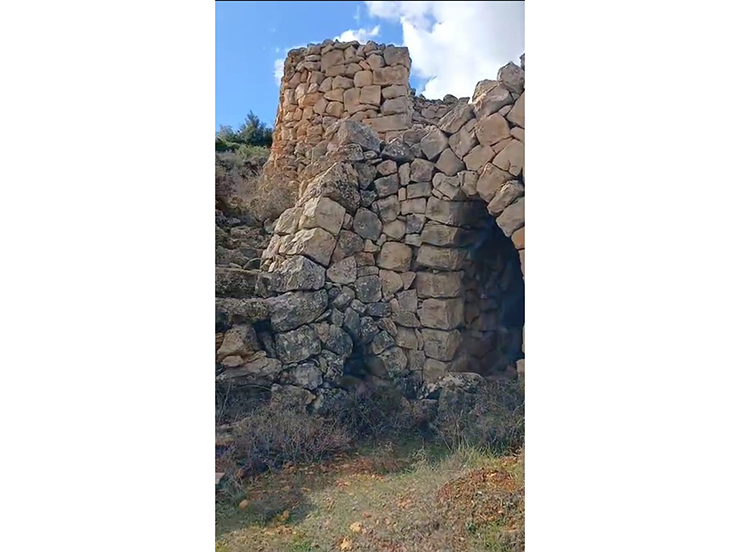
The winery is located just minutes from where Yaakov Avinu is believed to have experienced his famous dream. The surrounding area is rich with archaeological remnants of Israel’s ancient wine industry, including wine presses carved from solid limestone. One can still see remnants of where vineyard workers once slept. This is where our ancestors cultivated vineyards and drank wine.
The Mannes’ winery evolved into a family enterprise, with two of their seven children working alongside them, as well as several grandchildren. The winery blends refined wine culture with spiritual heritage, producing approximately 40,000 bottles of wine each year, which are sold in Israel and the United States. We even have a bottle in our own collection at home.
Hillel and Nina speak about their winery with passion and excitement. They feel a profound sense of purpose producing wine in Eretz Yisrael and take great joy in fulfilling the mitzvot hatluyot ba’aretz, mitzvot that can only be fulfilled in the Land of Israel. They encourage everyone to browse their website (beitelwinery.com) and visit their winery.
Life in Israel follows a seven-year agricultural cycle. Terumot and Ma’asrot are agricultural tithes required of produce grown in Eretz Yisrael. Some of the portions are assigned to Kohanim and Leviim. Additionally, in certain years, portions are given to the poor, and in other years have other restrictions.
When guests from America visit the winery, many express a desire to fulfill these mitzvot hatluyot ba’aretz. Some actually join the Mannes in performing these mitzvot.
Each year, the Mannes perform the mitzvah of Terumah and Ma’aser. Representatives of the Orthodox Union, the Religious Council (Rabbanut) for the Binyamin region in Israel, the New Square Rabbinical Kashrus Council, and the Eidah Chareidis, each of which provides hashgachah for the wine, were present. Also in attendance were members of my son’s kollel, eager to witness the agricultural laws they had studied come to life. The Rosh Kollel explained everything that was happening. This year, my son had the privilege of serving as the Levi during the ceremony.
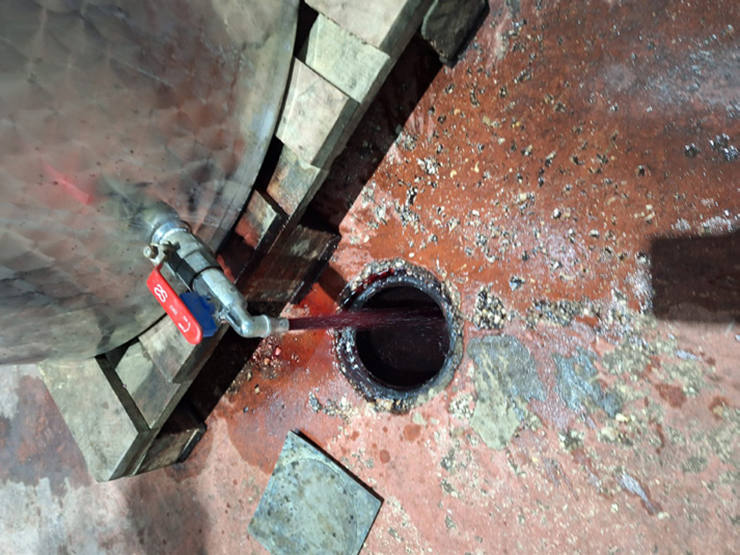
A highlight of the ceremony was when the Mannes opened the spigots of the barrels, allowing the wine to flow down the drain. They did this because Terumah is not given to the Kohen in our times. My son, who is a Levi, received the ma’aser. Rather than put all that wine into bottles, they made a kinyan agav, a halachic method of acquisition in which movable property is acquired together with land. Essentially, they gave my son ownership of the land that was under the wine barrels. True to his nature, my son returned the land—and, consequently, the wine he had been given. The Mannes were kind and gifted him two bottles of wine.
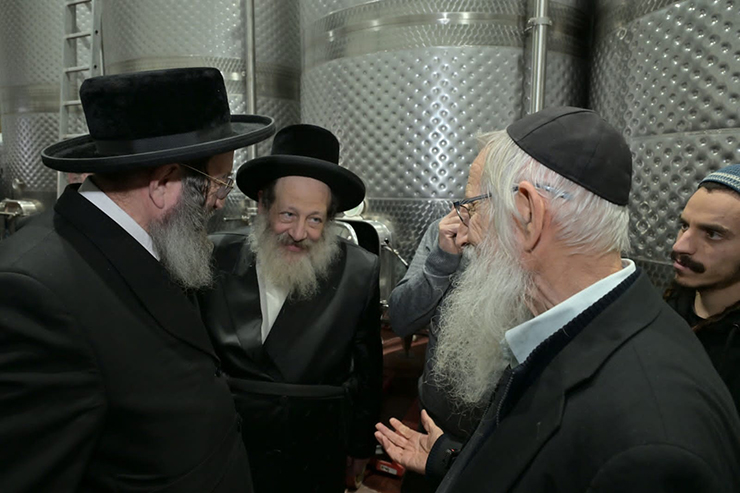
An interesting halachic question arose regarding the ceremony. Land in Yehudah and Shomron is not registered in the Tabu land registry. The army controls the land, and it is technically considered no-man’s land. The Mannes took possession of the land without dispute; yet because it is not formally registered in Hillel’s name, there was disagreement regarding whether a brachah should be recited when performing the mitzvah. To satisfy all opinions, wine was brought from Mazkeret Batya, where there is no doubt about ownership, and the brachah was made on that wine instead.
The Beit El Winery offers more than a fine drink. It provides a tangible connection to our past, transforming the act of drinking wine into a spiritual experience—one that links the soil of Eretz Yisrael, the mitzvot of the land, and the generations who once walked there. All in a bottle.
Suzie Steinberg, (nee Schapiro), CSW, is a native of Kew Gardens Hills and resident of Ramat Beit Shemesh who publishes articles regularly in various newspapers and magazines about life in general, and about life in Israel in particular. Her recently published children’s book titled Hashem is Always With Me can be purchased in local Judaica stores as well as online. Suzie can be reached at This email address is being protected from spambots. You need JavaScript enabled to view it. and would love to hear from you.