Mental health touches every aspect of our lives, yet it can often feel confusing or overwhelming. While conversations about mental health have become more common, many questions and misconceptions remain. Through this monthly column, I’ll try to make mental health more accessible by breaking down complex topics into clear and practical information. Whether you’re looking to better understand yourself, support someone you care about, or simply satisfy your curiosity, I hope each article leaves you feeling a little more informed, a little more empowered, and with a little more light to guide the way.
ADHD: Myth vs. Reality
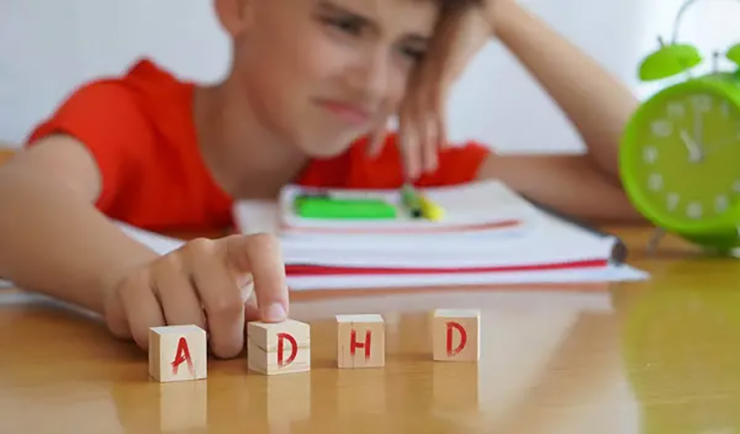
ADHD is one of the most widely discussed mental health conditions today, yet it remains one of the most misunderstood. Although awareness has increased significantly over the past decade, many misconceptions continue to shape how ADHD is recognized, diagnosed, and treated. These misunderstandings can delay diagnosis, contribute to unnecessary shame, and prevent people from getting the support they need.
When you think of ADHD, what comes to mind? A child bouncing off the walls? The kid who is always spacing out in class? Or maybe an adult who just can’t seem to get it together?
What does it mean when someone casually says, “I’m so ADHD today”? The truth is that ADHD is far more nuanced than simple hyperactivity or inattention, which may explain why, despite advances in our understanding of mental health, ADHD stereotypes continue to persist.
Let’s explore some common ADHD myths you may have heard, and the truth behind them.
Myth: ADHD is just the kid bouncing off the walls, not the quiet kid sitting in the back.
Reality: ADHD does not always look like hyperactivity.
The truth is, not everyone with ADHD is outwardly energetic or disruptive. ADHD stands for Attention-Deficit/Hyperactivity Disorder, and it is generally diagnosed in three presentations: predominantly hyperactive-impulsive type, predominantly inattentive type, or combined type, which includes symptoms of both hyperactivity and inattention. While some individuals with ADHD are constantly moving, interrupting conversations, or struggling to sit still, others present with a quieter, more inattentive form. This can look like chronic forgetfulness, disorganization, difficulty following through, losing things frequently, zoning out during conversations, or walking into a room and immediately forgetting why you went there in the first place. In children, inattentive ADHD may show up as a messy backpack, forgotten homework, careless mistakes, difficulty following multi-step instructions, or needing repeated reminders to complete even the most simple daily tasks. Because these symptoms are less disruptive, they can easily be overlooked. These individuals are sometimes labeled as “lazy,” “unmotivated,” or “not working up to their potential,” when in reality they may be struggling with executive functioning difficulties and inattentiveness due to ADHD.
Many of the earlier studies on ADHD were conducted primarily on boys. Boys are more likely (though not always) to present with predominantly hyperactive or combined symptoms, which are typically easier to notice. This likely contributed to the long-standing stereotype of ADHD as the child who is driven by a motor. Girls and women, on the other hand, are more likely to present with inattentive symptoms, which can be quieter and more internalized. As a result, many go undiagnosed until adolescence or adulthood, often after years of silently struggling. Of course, boys and men can also have inattentive ADHD, just as girls and women can be hyperactive.
Due to these common misconceptions, we must make an added effort to ensure these individuals with inattentive ADHD do not fall through the cracks and can receive the proper support.
Myth: ADHD just means you can’t…oh look a butterfly!
Reality: ADHD is not a lack of attention. It’s difficulty regulating attention.
One of the most common misconceptions about ADHD is that you simply can’t focus. In reality, many individuals with ADHD can focus very well on things that are interesting, stimulating, urgent, or rewarding. You may have a child who just can’t seem to get it together in shiur or at shul, constantly getting distracted, and yet can sit for hours playing with lego, video games, or a good book. Hyperfocus is a nuance of ADHD, which can be understood as becoming so absorbed in a task or activity that you lose track of time completely or have difficulty shifting focus to something else. For a child, this can lead to grades slipping, lack of sleep, and being reprimanded often. For an adult, this may look like leaving texts unanswered, forgetting to eat lunch, or suddenly realizing it’s 2 AM and not sure where the time has gone.
The difficulty is not attention itself, but the ability to regulate it consistently. Tasks that are repetitive, routine, or mentally understimulating can truly feel intolerable, even when the individual genuinely wants to complete them. For example, a long minyan might feel like actual torture to some kids, and even adults, with ADHD, but they may be able to spend hours deeply focused on building that IKEA dresser.
Research suggests dopamine pathways play an important role in ADHD. Dopamine is involved in motivation, reward, and drive. One way to understand ADHD is to think about the brain as having a baseline level of dopamine that helps us stay engaged in everyday tasks, even when they are repetitive or uninteresting, such as studying for a test, paying bills, or doing laundry. In individuals with ADHD, this baseline may be lower or less readily available, making it more difficult to sustain attention on tasks that offer less immediate reward. As a result, the ADHD brain is constantly seeking activities that provide enough stimulation to bring it up to that level of engagement.
This is also why you may hear someone with ADHD say they work much better under pressure or at the last minute. As a deadline approaches, the increased sense of urgency can increase dopamine activity, making it easier to focus and complete necessary tasks. Likewise, a person with ADHD will naturally be drawn toward activities that provide a dopamine release, rather than the task that is objectively most important. This helps us understand why ADHD is not just an inability to focus, but rather a difficulty regulating where the attention goes.
To be continued next week.
Levana Feldstein, PMHNP-BC, is a board-certified Psychiatric Mental Health Nurse Practitioner and founder of Moonlight Wellness, a private psychiatric practice serving children, adolescents, and adults in New York and New Jersey. With over a decade of experience in mental health, she is passionate about educating the community, reducing stigma, and providing compassionate, individualized care. She can be reached at This email address is being protected from spambots. You need JavaScript enabled to view it..