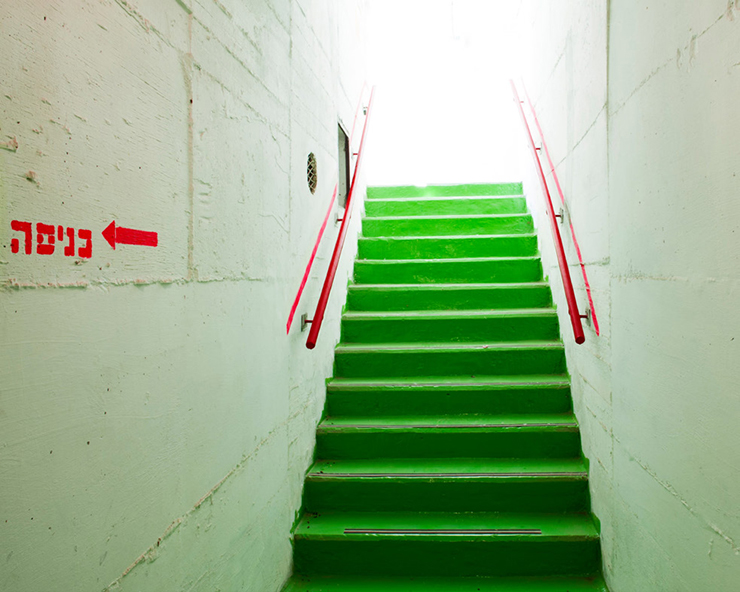
We all love a good story, so let me jump right in with a few that should put a smile on your face. These all took place in various bomb shelters (“miklatim”) across Eretz Yisrael in the recent war with Iran.
The first story is simple but very sweet. A friend of mine, who davens with me in our morning minyan, is the Rosh Kollel in Nof Yam, a community next to Herzliya. In addition to being a tremendous talmid chacham, this rav is involved in acts of chesed on a regular basis. Before Pesach, he financially helps 16 families with their Pesach shopping. These families cannot afford the beautiful – but very expensive – holiday of Pesach, and he personally sees to all their needs. He buys them everything, including meat, wine, fish, vegetables, dairy products, and, of course; hand-made matzah shmurah. It’s not easy to take upon yourself such a commitment, but he does it with a smile. Three days before Pesach, he told me that he bought everything except the fish. He needed 2,000 shekel but had finished calling his donor list and simply did not have anyone else to ask for funds. He said, “Shmuel, I did the best I could. I guess these families will have everything for Pesach except fish.” I told him that he shouldn’t give up yet. Pesach was in three days, which is more than enough time for Hashem to perform His miracles! He thanked me for the optimism and assured me that he would keep trying.
The next day, he came to minyan earlier than usual with a huge smile on his face. “Shmuel, I came here early because I had to share this with you. Yesterday afternoon, there was a siren and I was on the road with nowhere to go. I quickly made a few turns and found myself in an industrial area next to a factory that looked open. I quickly parked my car and ran in, asking if I could stand in their bomb shelter. The only person in the factory was an older gentleman who owned the company. “Of course you can come in. Stand with me and everything will be fine.” While the two of us stood there, we started schmoozing and he asked me what I was doing. I told this complete stranger about my Pesach fund and that I drove to see a friend whom I had hoped would help me with my fish purchase but, unfortunately, he was not able to see me. The factory owner told me not to worry; he would help with some money for fish. He asked for my bank details and, when the “all clear” was given, he sent me out of his factory with a smile. I never mentioned that I was 2,000 shekel short and he did not commit to any specific amount. When I returned home, I checked my bank account and…he wired exactly 2,000 shekel into my account!”
Let’s move on to story number two, which gives me the chills every time I think about it. The time is 2 a.m. and another rabbi friend of mine is in the miklat with many of his neighbors. (Note: Yes, I have a lot of friends who are rabbis. I’m not sure why.) He told me that he had stood there many times with his neighbors, but this time he decided to try something different. He went over to a non-religious fellow and asked him if he would be interested in learning Torah with him once a week. “No pressure. No coercion. Pick any topic you want. Just a few minutes each week to learn Torah as study partners.” The neighbor looked at him and said, “We have been neighbors for 12 years and I was wondering when you would ask me such a question. I see that you teach Torah across Israel and I kept asking myself: When will he teach me some Torah?” My friend was stunned. He had nothing to say because he knew the man was right. Twelve years they lived together in the same building, yet for 12 years my rabbi friend simply offered a sweet hello. He felt terrible and said, “For 12 years I passed a thirsty man – while holding a bottle of cold water – yet never offered him a drink.” Needless to say, these men now learn Torah together once each week.
The final story is not from a friend but is from a rabbi. As Yom HaAtzmaut was coming to a close, I attended an amazing shiur by Rav Reuven Sasson, Rosh Yeshivah of the Ramat HaSharon Hesder Yeshivah. He pointed out the many miracles that Hashem performed for us during the recent war, and he kept stressing that we need to focus on the positive in every situation. “Take, for example, the time we all spent in the miklatim. I do not have a private one so, like many of us, I had to run to the communal miklat in my area. There we were – in our pajamas – standing together. I looked around and realized that in this bomb shelter, standing with me is…am Yisrael. There was a guy who was holding his two cats, an older woman with Mickey Mouse pajamas, a yeshivah boy saying T’hilim, a family with a dog bigger than their kids, plus my family as well – all together, all anxious, all wondering when this will end. That’s when I realized that, despite our differences, we are not really different at all. Standing in that miklat were the different faces of am Yisrael – the one and only nation of Hashem. Thoughts began racing through my head that maybe this is why Hashem is doing this: to bring us together (literally) and to knock down the walls that we foolishly built between ourselves. I immediately took upon myself to focus more on ahavas Yisrael – on what unites us as opposed to what divides us.”
Think for a few minutes about these three stories. Hashem is sending us messages; yet, time after time, we tend to ignore them. What did we learn from Covid? From October 7? From the wars with Iran? Let’s open our eyes – and our hearts – to the lessons we need to take from all these challenges. I have no doubt that Hashem is talking to us. My only question is: Are we listening?
Shmuel Sackett is a 100% product of Queens. He was born in Middle Village and moved to KGH shortly before his bar-mitzvah. He graduated from YCQ (1975) and YHSQ (1979). He was Havurat Yisrael’s first Youth Director (4 years) and started the first 2 NCSY chapters in Queens. Shmuel made aliyah in 1990 and co-founded Manhigut Yehudit, together with Moshe Feiglin. His website is www.JewishIsrael.org Sackett is married with 6 children and 4 grandchildren. He lives in Herziliya Pituach.