Next week, Israel’s voters will go to the polls in an election that may determine not only the political future of Prime Minister Benjamin Netanyahu but also the direction of the country.
In Israel, voters do not elect the Prime Minister or their individual representatives. They elect the 120-member Knesset. Each voter selects a single party list. A party must receive at least 3.25% of the vote to be represented in the Knesset. Seats are allocated by a complicated system called proportional representation, under which the number of seats for each party is roughly equivalent to the percentage of the vote it receives. If a party receives 10 seats, the first ten candidates on the party’s list become members of the Knesset.
Once the number of seats is determined, the President consults with each party. Based on the recommendations of the parties, the President appoints a Knesset member to form a government. The prospective Prime Minister has twenty-eight days to form a government, with the possibility of a fourteen-day extension. The proposed government and its ministers must win a vote of confidence in the Knesset in order to take office. No Israeli party has ever won a majority of the votes. Each government has been a coalition of several parties. In practice, the party leader who can put together a coalition that can win a majority of the votes in the Knesset becomes Prime Minister. This usually, but not always, has been the leader of the party with the largest number of votes.
If the Prime Minister-designate is unable to form a government, the President can give the mandate to another Knesset member or ask the Knesset to decide. If no party is able to form a coalition, a date is set for another election. Between 2019 and 2022, Israel held five elections. The incumbent government continues to serve on an interim basis until a new government is formed.
The major parties contesting the election are:
The Current Coalition
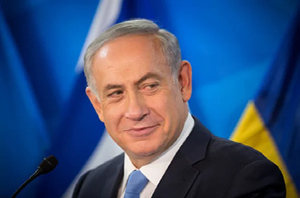
Likud, Led By Benjamin Netanyahu – This party, founded by Menachem Begin, has governed Israel for most of the last fifty years. Netanyahu, in three separate stints, has served as Prime Minister for nineteen years. Supporters credit Netanyahu with Israel’s resilient response to the October 7, 2023, massacre, severely weakening Hamas and Hezbollah and setting back the Iranian nuclear program. Military and intelligence cooperation between Israel and the United States is stronger than ever due to Netanyahu’s friendship with President Trump. Opponents say that, as Prime Minister, Netanyahu is ultimately accountable for Israel being unprepared for the massacre and has refused to take responsibility. Hamas, Hezbollah, and Iran are down but not out, and Israel remains in danger. By placing all of Israel’s eggs in the Trump basket, Netanyahu has needlessly alienated the Democratic Party and destroyed bipartisan support for Israel in America.
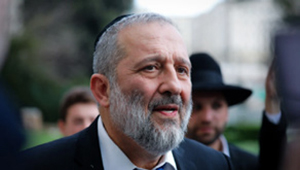
Shas, Led By Aryeh Deri – This party, founded by Rav Ovadya Yosef zt”l, has built a school system and a network of batei midrash and mikvaos that have significantly strengthened Torah observance among the Sephardic and Mizrachi Jews, who are the majority of the population of Israel. Shas values the contributions of those who learn in kollel and those who serve in the IDF. But some Shas rabbanim have denigrated Religious Zionists who combine Torah study with military service, and the party supports draft exemptions for all chareidim, including those who are not learning full-time. In the past, Shas has brought together Sephardic chareidim and Religious Zionists with a common commitment to strengthening Torah. Many former Shas supporters among the Religious Zionists feel the party has abandoned them. Deri has twice been convicted on corruption charges and was barred from serving as a minister in the current government due to a recent plea bargain.
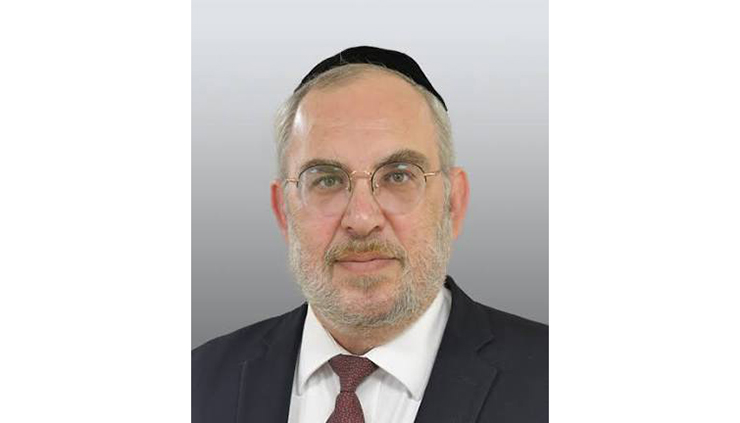
United Torah Judaism, Led By Yaakov Asher – A Council of Torah Sages from both the Degel HaTorah (Litvak) and Agudath Yisroel (Chassidic) factions of the chareidi community sets the policy for this party. Their main concerns are exemption from the draft for all chareidim, stipends for kollel families, and funding for yeshivos and community institutions. As a result of the recent war, thousands of Israelis have served the better part of the past three years in the reserves. Lives are being risked and, in some cases, lost; people have been injured and disabled for life; family life has been disrupted; and businesses have closed. There is widespread resentment that a segment of the population, especially those who are not learning full-time, is exempt from the draft. This has been exacerbated by demonstrations at which the IDF is denounced as an “enemy army,” Torah scholars who advocate military service are denigrated, and people engage in violence and vandalism. While the people who behave in this way are a minority of the chareidi community, they are the ones who are seen in the news, and they are causing a chilul Hashem of massive proportions. Opponents of United Torah Judaism fault the rabbis who lead the movement for condoning this behavior by their silence.
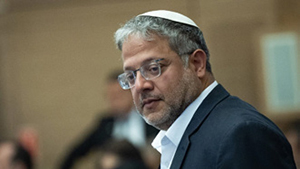
Otzma Yehudit, Led By Itamar Ben Gvir – The party platform calls for annexation of Judea and Samaria, the death penalty for terrorists, and strengthening Jewish identity in the school system. Ben Gvir is the current Minister of National Security. He has been a supporter of Rabbi Meir Kahane, who called for the expulsion of Arabs from the Land of Israel. Supporters praise his uncompromising positions, his assertion of Jewish rights, and his record of toughening conditions for terrorist prisoners. Opponents say that crime in the Arab sector has soared during his stint in charge of the police. His incendiary statements, provocative actions, and condoning or encouraging of vigilante attacks on Palestinians have caused divisiveness in Israel and harmed Israel’s image abroad.

Religious Zionist Party (RZP), Led By Bezalel Smotrich – Smotrich is the current Minister of Finance. The platform calls for construction of new settlements, expansion of existing ones, and the annexation of parts of Judea and Samaria. The party has also called for legalizing what it calls “young settlements” and opponents call “illegal outposts.” RZP supports the “status quo,” which protects individual privacy in the private domain while preserving the Jewish character of the state in the public domain. In practice, this has meant no public transportation and the closure of most businesses on Shabbos in most of the country, maintenance of kashrus in the army and government, and control of personal status issues such as marriage, divorce, and conversion by the Chief Rabbinate. Opponents claim that the “status quo” amounts to “religious coercion.” They also claim that the expansion of settlements harms Israel diplomatically, is detrimental to achieving peace with the Palestinians, and encourages vigilante attacks.
The Opposition
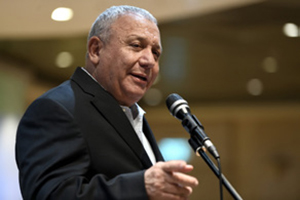
Yashar, Led By Gadi Eisenkot – Most polls show Yashar as the leading opposition party and Eisenkot as Netanyahu’s strongest opponent. Eisenkot served in the IDF for forty-six years, culminating in his appointment as Chief of Staff in 2015. His son, Gal, and nephews, Yogev Pazi and Maor Cohen-Eisenkot, were killed in the Gaza Strip during the current war. Yashar calls for the establishment of a State Commission of Inquiry to investigate the failures leading to the October 7, 2023, massacre and the conduct of the subsequent war. It will develop plans to rehabilitate bereaved families, survivors of captivity, and those suffering from post-traumatic stress. Eisenkot has called for a “realistic” approach to the chareidi draft issue, granting a limited number of exemptions to serious yeshivah students who learn full-time while requiring the majority of chareidi men to serve in the IDF or perform some form of national service in an atmosphere that will allow them to retain their chareidi lifestyle. While opposing a Palestinian state, Eisenkot has also pledged to “expand the circle of peace, ensure a solid Jewish majority, and strengthen Israel’s standing in the world.” Opponents claim that Eisenkot has run a lackluster campaign based on a compelling personal biography and the fact that he is not Netanyahu. His plans are vague, and he has failed to articulate a vision for the future of Israel.

B’Yachad, Led By Naftali Bennett – In 2021, Naftali Bennett and Yair Lapid came together to form a government that briefly ousted Netanyahu from power, with Bennett as Prime Minister and Lapid as Foreign Minister. When the government lost its majority, Lapid became Prime Minister. This odd couple, Bennett, a former leader of the National Religious Party, and Lapid, the leader of the anti-religious Yesh Atid Party, have come together again.
Bennett has laid out a clear plan for the future. The centerpiece is a universal draft of all chareidim for military or alternative national service in a chareidi-friendly atmosphere. Institutions that fail to cooperate would lose all government funding, and the families of individuals who refuse to serve would be ineligible for government subsidies. A restructured education system would require all schools to spend 60% of their time on a core curriculum of math, science, computers, English, Tanach, civics, and Zionism. The remaining 40% of the time could be spent on other subjects, such as Gemara. Bennett has vowed that his first act in office will be to establish a State Commission of Inquiry into the October 7, 2023, massacre. He has called for the adoption of an Israeli constitution. Both Bennett and Lapid have called for allowing public transportation on Shabbos and the legalization of civil marriage. Opponents claim that Bennett cannot be trusted. He is a former leader of the National Religious Party who now supports public transportation on Shabbos and civil marriage. During the 2021 campaign, as leader of the right-wing Yamina Party, he vowed never to form a government depending on the support of an Arab party and then proceeded to form an alliance with the anti-religious Lapid to do exactly that.
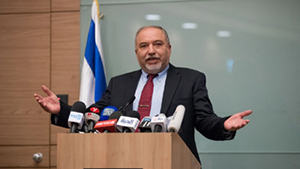
Yisrael Beiteinu, Led By Avigdor Lieberman – Lieberman is a former Netanyahu protégé who served as director general of the Prime Minister’s Office from 1996 to 1997. He founded Yisrael Beiteinu to appeal to his fellow immigrants from the former Soviet Union. The party briefly merged with Likud, with Lieberman seen as Netanyahu’s heir apparent. They have since had a bitter falling out. Lieberman has served as Foreign, Finance, and Defense Minister. He resigned as Defense Minister in 2018 in protest of a ceasefire in Gaza. It has since been revealed that Lieberman wrote a top-secret document warning that Hamas was planning an attack to seize Israeli territory on the Gaza border and take hostages. In 2004, he advocated a plan for land swaps with the Palestinian Authority and the barring of Arabs from Israeli citizenship unless they took a loyalty oath. Lieberman combines a hawkish position on national security issues with staunch opposition to a halachic state. He supports public transportation on Shabbos and the legalization of civil marriage. Lieberman has called for the conscription of all chareidim, with the IDF determining who will serve in the military and who will perform alternative national service. His opponents note that Lieberman has been indicted several times on corruption charges.
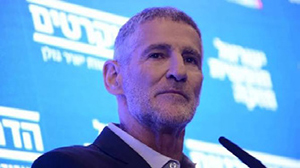
The Democrats, Led By Yair Golan – In 2024, the Labor Party, which governed Israel for the first 19 years of its existence, and the staunchly left-wing and secularist Meretz Party merged to form the Democrats. Yair Golan served in the IDF for thirty-eight years, rising to become Deputy Chief of Staff. The Democrats call for peace agreements with the Arab states and the Palestinians, which will allow for Palestinian self-determination without compromising on security. They also call for ending “religious coercion” by allowing public transportation on Shabbos, legalizing civil marriage, and promoting the rights of the LGBTQ community. On October 7, 2023, Golan, by then a civilian, grabbed his gun and drove in his private car to rescue people at the Nova Music Festival. He has since harshly condemned the government’s conduct of the war, saying, “a sane country does not wage war against civilians, does not kill babies as a pastime, and does not engage in mass population displacement.”
The Arab Parties
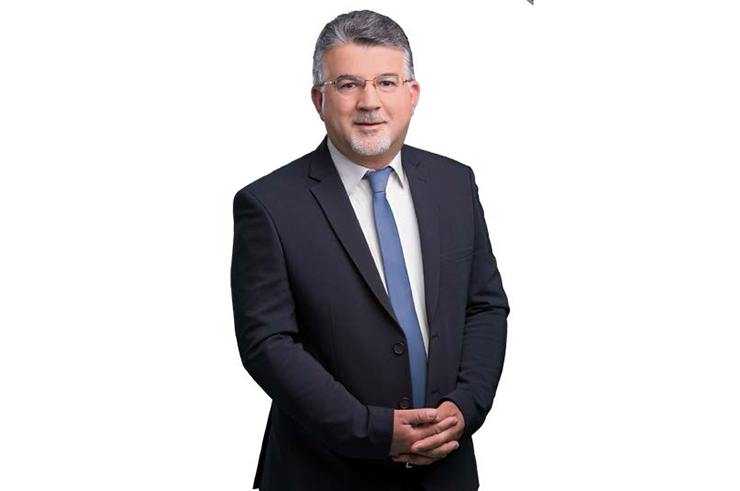
The Joint List, Led By Yousef Jabareen – Three Arab parties, which individually would not have drawn enough votes to reach the threshold, merged to form one party. They support a freeze on settlements and a “just peace” between Israel and a Palestinian state.
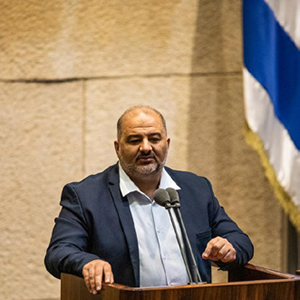
Ra’am, Led By Mansour Abbas – The party’s roots are in the Islamic movement, but it has shifted direction. Abbas has said that Israel is and always will be a Jewish state and that his focus is on improving the quality of life for Israeli Arabs and combating crime in the Arab sector. Ra’am was in the coalition of the Bennett-Lapid government.
New Parties

People Of Israel, Led By Ofer Winter – Winter is a retired IDF general who founded People of Israel as a right-wing alternative to Likud. He blames both the current government and opposition for the disaster of October 7, 2023, and seeks to bring fresh faces into the Knesset. Winter has pledged to seek a decisive victory over Israel’s enemies, oppose a Palestinian state, and encourage the voluntary emigration of Palestinians from Gaza. He supports Netanyahu for Prime Minister but will not join a government that does not pass legislation requiring all draft-age Israelis, including chareidim, to report for military service.

Reservists–Economic Party, Led By Yoaz Hendel – Hendel is a former Communications Minister and reserve battalion commander. He has called for universal military or national service and stripping the voting rights of those who refuse to serve. The party is willing to serve in a broad unity government headed by either Netanyahu or Eisenkot that excludes the chareidim. It will not join a narrow coalition.
Polls show both People of Israel and Reservists–Economic hovering around the 3.25% threshold. If one or both cross the threshold, they could be in a position to be kingmakers. If they fail to meet the threshold, the votes cast for them would be wasted.
An Intriguing New Party
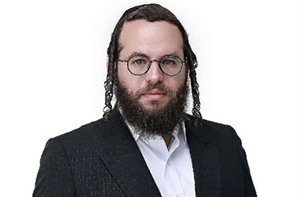
HaTzibur HaHaredi, Led By Moti Leitner – Formed as a chareidi alternative to Shas and United Torah Judaism, the party is led by Leitner, the Deputy Mayor of Beit Shemesh. It calls for serious talmidei chachamim who are learning full-time in yeshivah to be exempt from the draft. Other chareidi men would be required to serve in the IDF or perform national service in a way that is compatible with the chareidi lifestyle. The chareidi school system would remain independent and focused on Torah but would also include core subjects such as math, computers, and English to prepare chareidim to enter the workforce and reduce the rate of poverty in the chareidi community. Rabbi Yehuda Oppenheimer, who has been a columnist for this newspaper, is a candidate for the Knesset on the HaTzibur HaHaredi list.
By the time this newspaper appears next week, we may know the distribution of the seats in the Knesset. But the horse-trading and jockeying for position between parties seeking to form a coalition will have just begun.
Will either Netanyahu or Eisenkot gain enough seats to form a coalition? Will the opposition receive a plurality of the seats and form a government with the tacit cooperation of the Arab parties, who will abstain on the vote of confidence? Will Knesset members shift their alliances? Will new parties cross the threshold and become kingmakers, or will their votes be wasted? Will there be a unity government with rotating prime ministers? Will there be new elections if no one is able to form a government? Stay tuned.