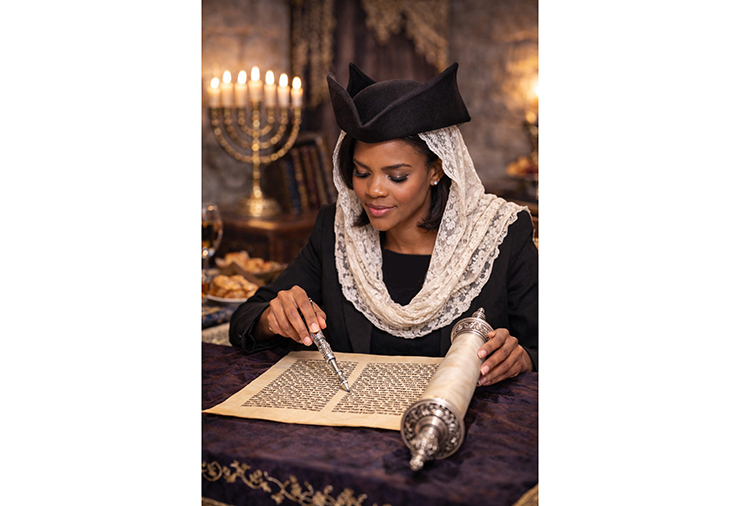
Let’s just say it: the story of Esther is not the courageous story we have been force-fed for the last 4,000 years. It is the original exposé on a corrupt imperial regime, a beauty-pageant-industrial complex, and what I am going to call—without hesitation—the Deep Palace State.
And if you think that’s dramatic, you haven’t been paying attention. Firstly, we’re told this all happens under King Achashverosh—Xerxes to his Greek friends—ruler of 127 provinces stretching from India to Ethiopia. That’s not a kingdom; that’s a bureaucratic nightmare with a drinking problem.
Right out of the gate, we see the rot. The king throws a 180-day feast to show off his wealth. One hundred and eighty days. If your government can afford a six-month party, I promise you your tax structure is out of control.
But the real story? It starts with Queen Vashti.
The “Vashti Incident”—How to Stage a Palace Reset
Vashti, whom we are assured is a woman, refuses to parade before a drunken audience. What happens next? A group of royal advisers panic—PANIC—that women across the empire might start thinking they can say no to their husbands. Suddenly, Vashti is dead.
Now here’s my question: Who benefits?
Now, I’m not saying Mordechai personally engineered the situation. I’m just asking questions. Isn’t it a little convenient that the removal of Vashti perfectly clears the path for his niece to enter a kingdom-wide “search” for a new queen? Coincidence? Maybe. But if you think elite power vacuums just happen organically, I have a Persian bridge to sell you.
We are told Esther is taken into the king’s harem during what we can only hope amounts to the most ancient form of a state-sponsored reality dating show at best. “The Bachelor: Imperial Edition”—months of beauty treatments, strategic preparation, access to elite insiders only. At worst, well, they didn’t call it “Hegai Island” for nothing.
And somehow—SOMEHOW—she wins.
Let’s pause. In a kingdom spanning three continents, the new queen just happens to be connected to a politically savvy court insider sitting at the king’s gate? Okay.
Mordechai and the Conveniently Overheard Plot
Now we get to my favorite part. Mordechai just happens to overhear two royal guards plotting to assassinate the king. He just happens to be in the right place. He just happens to understand what they’re saying despite them speaking a language only a handful of people understand. He just happens to report it through Esther. And he just happens to get it written down in the royal chronicles.
Listen. I believe in divine providence. But I also believe in asking basic questions. How often do palace guards loudly discuss treason within earshot of a random official sitting at the gate? In a language only he can understand? How do we even know that there was a plot against the king? The only people who knew the language were the supposed perpetrators and the guy who overheard them. There wasn’t even a trial. Bigtan and Teresh were just offed at the word of a political elite.
Here’s what that moment accomplishes: it plants Mordechai’s name in the king’s record books. It creates a future IOU. It establishes leverage. And leverage, in ancient Persia, was everything. If you were writing the script for a political ascent, you would include exactly this kind of early “heroic” moment—obscure at first, but ready to be weaponized later. Just saying.
Haman: The Establishment’s Golden Boy
Haman rises to second-in-command. He gets the ring. He gets the authority. He gets the bowing, but Mordechai refuses to bow. We are told this is about principle. About identity. About conviction. But what if it’s also about provoking a reaction? Because what happens next is not a minor HR dispute. Haman decides to eliminate an entire people group across the empire. That escalated quickly.
Now let’s think strategically. If you wanted to expose a corrupt official, what would you do? You’d bait him into overreach. You’d let him sign something reckless. You’d let him reveal himself. Haman signs an empire-wide decree of destruction—stamped with the king’s own ring. And who benefits when that decree eventually backfires? Not Haman.
I think we’re starting to sense a pattern here.
The Banquet Strategy—Optics Matter
Esther doesn’t immediately confront the king. She invites him to a banquet. Then another banquet. Optics. You don’t accuse the second-most-powerful man in the empire without controlling the room. This wasn’t improvisation. This was messaging. Optics.
And let’s talk about timing. Right before the second banquet, the king has insomnia. He just happens to have the chronicles read to him. He just happens to rediscover Mordechai’s act of loyalty. He just happens to realize he never rewarded him. And who is standing in the courtyard at that exact moment? Haman.
The king asks Haman how to honor someone who is long overdue for public admiration. Haman assumes it’s about him—classic ego trap—and designs an elaborate public honor, which he then has to perform for Mordechai.
Public humiliation. Narrative shift. Momentum swing. If you don’t see the choreography here, you’re not looking.
Charvona’s Sudden Moral Awakening
Now we arrive at Charvona. Charvona is one of the king’s advisers. A palace insider. A professional survivor. At the moment Haman is accused, Charvona casually mentions that Haman built gallows for Mordechai. He doesn’t go to the police. He doesn’t go to the press. He just casually drops it into conversation. “Oh, by the way, Your Majesty…” Where was this information earlier? Why surface it now? Because palace politics is not about loyalty. It’s about proximity to power.
Charvona didn’t suddenly discover a conscience. He discovered which direction the wind was blowing. When the king gets mad, Charvona adds fuel. He doesn’t defend Haman. He doesn’t hedge. He supplies the final dagger. And just like that, Haman is executed on his own structure. Hoisted by his own petard (which, if you know your idiom history, this is shockingly close to the original phrase). In every political regime, there are Charvonas—the ones who flip at the exact right moment and call it virtue. That’s not a moral awakening. That’s a survival instinct.
The Counter-Decree and the Bureaucratic Backflip
Now here’s where things get truly fascinating. The king cannot revoke the original decree. Persian law, we’re told, is irreversible. So instead, a second decree is issued. Not canceling the first—but empowering the targeted group to defend themselves and destroy anyone who attacks them.
Firstly, what is this even meant to accomplish? The targeted group is allowed to defend itself? Of course they are! What exactly would be the punishment for defending oneself against death? DEATH? This decree wasn’t for protection. It was an excuse. 75,000 dead in one day. Let’s just call it what it is. That’s a genocide. The population of the entire world at that time was about 12 million. 75,000 is about 0.5% of the entire global population. That would be the equivalent of 41 million people today. Are you really telling me that 0.5% of the global population was attacking one tiny subset? No. This wasn’t self-defense; it was an excuse to bump off a Persian adversary that was just trying to live in peace. Genocide.
Let’s go back to the fact that all 75,000 were killed in a single day. That’s the narrative. Seventy-five thousand. In one day. Across 127 provinces. Let’s talk logistics. This was not chaos. This was coordination. Messengers dispatched, provinces alerted, timing synchronized. You don’t mobilize empire-wide defense without preparation.
Was this self-defense? We are told so. But the speed, the scale, the precision—it suggests something far more organized than spontaneous survival. When systems flip this quickly, someone has been planning.
The Deep Palace State
Let’s zoom out. A queen removed, a new one installed. A loyal insider strategically positioned at the gate. A conveniently overheard assassination plot that creates leverage. An overreaching official baited into destruction. A public humiliation ceremony that rewrites the narrative. A palace insider flipping at the decisive moment. A counter-decree that mobilizes empire-wide action with astonishing (genocidal) efficiency. If this were modern politics, we would not call this random; we would call it strategic.
Now I have heard through my sources who will remain unnamed to protect their identity, that Mordechai didn’t like that Achashverosh was trending away from aiding the Jews in rebuilding the Temple. In the months leading up to Haman’s plot, he was going cold on the Jews. Again, this is not me; I just heard it from my sources. Is it not possible that Mordechai, noticing that the tide was turning against him and his allies, orchestrated this whole plot from Vashti to the plot against Achashverosh’s life to the sudden flip by Charvona to the genocide of 75,000?
I’m not making accusations. I’m just asking questions.
Izzo Zwiren is the former host of the Jewish Living Podcast. Follow him and his brothers on their health journey on their YouTube Channel, Brotherly Lovehandles. Izzo lives on Long Island with his wife and three adorable, hilarious children.