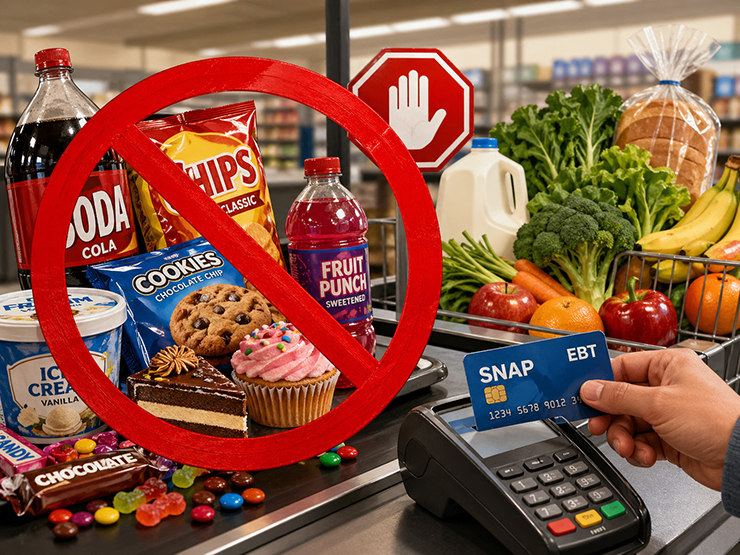
Here is a shocking statistic: 92.7% of U.S. children and 86% of U.S. adults eat at least some junk food every day. This is shocking because it’s well-known that regular consumption of junk food has been linked to obesity, serious diseases, dental problems, and a host of other issues we’d like to avoid. Do you know what’s even more amazing? The government is paying for a significant amount of that.
If you find this upsetting, hang in there because there’s good news: A significant change in this policy is in the works. And to give credit where credit is due, thank the Make America Healthy Again initiative for its efforts on behalf of the American people.
“States across the country are cracking down on people buying junk food using SNAP benefits,” according to Facts Matter reporter Roman Balmakov. And they have their work cut out for them because the market for junk foods and sweetened drinks is enormous. If you want to get an idea of just how vast it is, then walk around your local supermarket and you’ll see aisle after aisle of what could be called chazarai heaven.
And if you look into the shopping carts you pass, you’ll see many of them filled with super-sweet drinks, packaged cakes and cookies, ice cream, and other unhealthy delights. In other words, we’re not talking about kids buying candy bars on their break, but adults who purchase these items as part of their regular shopping routines. And many of these items are purchased with government-sponsored SNAP food benefits.
A USDA report noted that approximately 23% of SNAP dollars are spent on what it called “less healthy food,” which includes “sweetened beverages, prepared desserts, salty snacks, candy, and sugary items.” Balmakov adds the report also found that “soft drinks ranked as the number one single item that’s purchased by SNAP recipients.”
SNAP Out of It
SNAP is not a new government program. It was introduced back in 1964, and its letters stand for Supplemental Nutrition Assistance Program. Back then, the program was “sold” to the public by saying that it offered supplemental nutrition to the poor and others who were down on their luck. The objective: To enable them to purchase groceries and other essential items that they could otherwise not afford.
Thanks to SNAP, poor people would not starve to death because the federal government would give them spending money to buy nutritious groceries. This idea made sense to a lot of people. But in the 60-plus years since it was introduced, some things have changed. Among those is that many recipients now use it to purchase items that are actually harmful to their health.
Drink Up
Soft drink companies derive more than a quarter of their U.S. revenues from SNAP (and related) programs. Balmakov said estimates he’s seen show that Pepsi earns $6–$7 billion per year from SNAP, and Coca-Cola more than $1 billion (at least one other estimate says Coke actually earns many billions).
According to A.I. Overview, 5%–10% of total SNAP expenditures are used to purchase sugary drinks. By the way, companies that sell related products such as candy and cookies also benefit significantly from SNAP; Hershey, for example, does a $3 billion-a-year business from SNAP.
All of this business is very helpful for the bottom lines of these companies but not so good for the government, which pays for them in two ways: First, it provides funding for SNAP, which is intended to help poor people eat healthful foods. And second, by having to help pay medical costs for people who regularly eat unhealthy foods for many years.
As a result, it’s no surprise that there’s growing and more vocal criticism about the SNAP program. Here’s what Jessica Knurick, a Ph.D. and RD, had to say about it: “In its current form, SNAP operates as a de facto subsidy program that props up some of the unhealthiest parts of the food industry.” News outlet The Hill was even more blunt. It said, “SNAP shouldn’t subsidize America’s obesity epidemic.”
Tasty, but Harmful
Americans spend $23 billion a year to purchase unhealthy foods using SNAP. While these certainly taste good, helping SNAP recipients purchase them is not doing anyone a favor because every one to two daily servings of sugar-sweetened beverages increases the risk of developing diabetes very significantly. Moreover, the same is true for the risk of obesity.
According to Balmakov, when the food stamp program was introduced in the 1960s, some Americans were not consuming enough calories. Now, thanks to SNAP and related programs, caloric and micronutrient deficiencies are far less of a serious problem.
But while that problem has eased, another one developed: The adult obesity rate has soared. Statistics compiled by the CDC (Centers for Disease Control and Prevention) show that between 40.3%–42.4% of U.S. adults were obese in the years between 2021–2023. A recent Rockefeller Foundation report found that diet-related diseases cost the U.S. $1.1 trillion annually—that’s 25% of total health expenditures.
Considering these high and ongoing costs, it’s no surprise that a backlash against the government paying for unhealthy products is growing. There are now 22 states that ban items like soda, candy, and energy drinks from being included in SNAP; several, however, won’t begin enforcing the ban until 2027 and others 2028.
Banning sugary drinks and candies makes a lot of sense. After all, why should the government pay for programs that make people sick and, in the long term, will require paying to help treat those illnesses? But these days, logic doesn’t necessarily rule, and that explains why some people oppose the ban.
According to Balmakov: “A lawsuit has been filed against the USDA by some food stamp recipients who don’t appreciate these restrictions.” The suit was filed by the National Center for Law and Economic Justice, a nonprofit organization focused on supporting justice for low-income families.
We’ll have to wait to find out how successful this suit will be. But one thing is becoming very clear: For many people, ingesting sweetened drinks and treats is much more than a deeply ingrained habit. They’ve likely become addicted to sugar, and these cravings become overpowering. To that end, they’ll do as much as legally possible to keep the sugar coming, whatever the cost.
Sources: cdc.gov; factsmatterwithromanbalmakov.com; pmd.ncbi.nlm.nih.gov/articles; thehill.com
Gerald Harris is a financial and feature writer. Gerald can be reached at This email address is being protected from spambots. You need JavaScript enabled to view it.