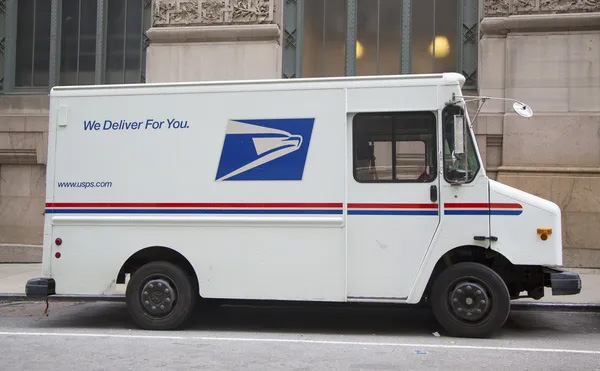
To paraphrase a comment made by former Sen. Everett Dirksen: Add a few cents here and a few cents there, and pretty soon you’re talking about real money. If you don’t believe that, just look at what’s happening at the Post Office. On average, their loss on each letter and parcel delivered is insignificant, but multiply that billions of times and you’ve got a humongous and growing loss.
The Post Office’s losing streak has now lasted 19 years, and there is no end in sight. In fiscal 2025, it was in the red for $9.0 billion. But there is a silver lining: that was an improvement from the $9.5 billion it lost in fiscal 2024. The last year it was profitable was fiscal 2006. According to AI Overview, since then, it has lost more than $120 billion. That’s a tough pill to swallow at any time, and especially these days when the government’s deficit is so high.
Now the well is starting to run dry. “The U.S. Postal Service could run out of cash to pay workers and vendors within approximately one year… with a potential cash crunch by February 2027,” according to Postmaster General David Steiner. But Steiner adds that it could become even worse and happen by October 2026. “Without intervention from Congress to raise borrowing limits, the agency is facing a severe financial crisis.”
A report on Reuters said that the Post Office would probably not be forced to shut down entirely. It may, however, have to “reduce services,” which is a polite way of saying that some post offices will be forced to close, the number of delivery days may be reduced, the cost of stamps will rise, or some combination of these.
Stamp Of Approval
Despite all the criticism, the Post Office does a herculean job. In 2024, it delivered 112.5 billion pieces of mail and packages, which comes out to an average of 371.3 million pieces each day. These include everything from circulars to postcards, invitations, announcements, urgent overnight deliveries, and the endless stream of bills we are all tormented by. Everyone needs a reliable source to send and retrieve letters and parcels.
Providing service of this magnitude comes at a price, and in this case, the price is paid by stamps. This is not a new idea. Postage stamps were introduced on July 1, 1885, but back then the price to deliver a one-ounce letter was just two cents. That bargain rate held for decades, and the three-cent stamp lasted for 26 years. Over time, postal rate increases have become much more frequent, and increases of just one cent at a time are a thing of the past. For example, the Post Office has proposed raising the current price of a “Forever” stamp from 78 cents to 82 cents on July 12.
Pennies Add Up
Despite higher rates and automation, losses at the Post Office remain steady and steep, even with the efficiencies implemented over the years. Why is it losing so much money?
The simplest answer is that it’s a sign of the times; everything is becoming more expensive, and someone has to foot the bill. In this case, that burden falls on postal customers.
There are additional reasons to explain the very real and difficult challenges the Post Office deals with. Despite the tremendous volume of mail it handles and the enormous revenues generated, “the Post Office’s losses are primarily attributed to declining volumes of high-margin First-Class Mail,” according to ThoughtCo.
Another factor is that the Post Office must compete with other delivery services such as UPS, FedEx, and DHL, which can more easily cut jobs or raise prices when necessary. Moreover, it also has to contend with email, which delivers important messages instantly for free—messages that would otherwise have been sent through the Post Office, generating billions in revenue. As a result of this competition, the volume of physical mail is declining.
The General Accounting Office (GAO) says that the Post Office “continues to operate its universal delivery network, visiting 168 million addresses, six days a week. But now it is delivering a lot less mail, with First-Class Mail volume less than half what it used to be.”
The bottom line is that the Post Office has very high operating costs, many of which are fixed, in addition to rising expenses and retirement benefits. Higher postage rates don’t even come close to covering all of these.
The Whispered Solution
If higher postage prices are not the answer, then what is? One solution being whispered—in increasingly louder voices—is for the government to privatize the Post Office. Elon Musk has said the U.S. government should privatize as many services as possible or face failure and bankruptcy.
Separately, President Trump has come to a similar conclusion. According to AI Overview, Trump “has long expressed a desire to privatize the Postal Service or overhaul its structure, rather than simply print more money for it. Moreover, he has criticized the agency’s financial losses, threatened to block funding, and has floated putting it under the auspices of the Commerce Department.”
What would happen if the Post Office were privatized? No one can say for sure at this point, but it’s a good bet that some services would be cut, automation would increase, and some employees might be let go. Both Republicans and Democrats have been trying to avoid such a situation for decades. Unfortunately, as the red ink continues to flow while money becomes tighter, biting the bullet may be inevitable.
Expensive as it is, the Postal Service is still a great bargain. Imagine the time, cost, and hassle of having to go to a central location to pick up all your mail. At 78 cents (currently), it’s a remarkable deal. It’s just not as great a bargain as it used to be.
Sources: AI Overview; bloomberg.com; gao.gov; zerohedge.com
Gerald Harris is a financial and feature writer. Gerald can be reached at This email address is being protected from spambots. You need JavaScript enabled to view it.