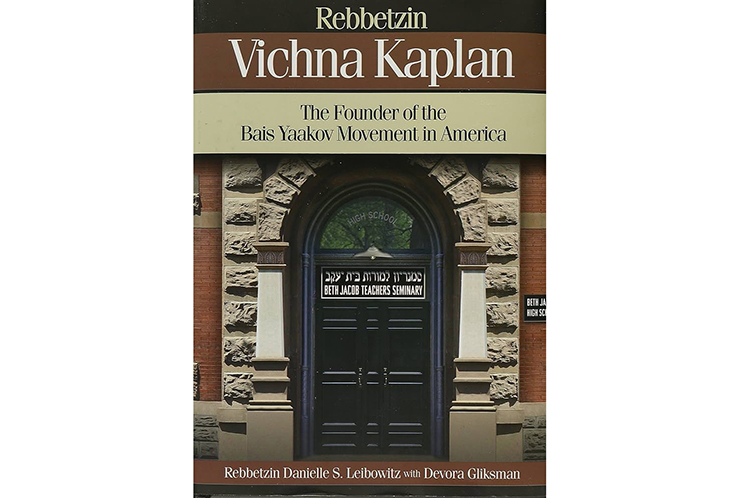
On Motza’ei Shabbos, February 21, Rebbetzin Danielle Leibowitz, wife of the late Rosh HaYeshivah Rav Henoch Leibowitz zt”l, addressed an audience in Queens, sharing poignant life experiences and reflections on Rebbetzin Vichna Kaplan, who profoundly shaped her life. Rebbetzin Leibowitz co-authored a published biography of Rebbetzin Kaplan titled Rebbetzin Vichna Kaplan: The Founder of the Bais Yaakov Movement in America.
She opened with a brief d’var Torah on Purim. In Megillas Esther, Hashem’s name is never explicitly mentioned; events unfold seemingly by chance, yet it is clear that Hashem orchestrates every detail and directs our lives. “That is the theme of my talk,” she declared. “Hashem runs my life.”
Rebbetzin Leibowitz recounted her unexpected journey to Queens. “I only knew Queens for the World’s Fair and cemeteries,” she said. “I did have a sister in Kew Gardens.” She described the warm welcome she received: “It’s been a wonderful experience. Everyone has been so welcoming. I feel like part of the Queens family!”
She shared how a neighbor in Monsey suggested the shidduch with Rav Henoch when she was in her 70s. Initially hesitant, she ultimately agreed: “Hashem runs the world. Baruch Hashem, we did get married.” Tragically, Rav Henoch passed away after a few years.
Deciding to relocate to live near her children, divine providence intervened. A talmid of the Rabbinical Seminary of America (Yeshiva Chofetz Chaim) invited her to his vort in Kew Gardens. The chasan approached her gratefully: “It’s like the Rosh Yeshivah is here.” The following week, while visiting a mourner she did not know, the family’s faces lit up upon seeing her; they, too, felt the Rosh Yeshivah’s presence through her. Recognizing that she represented her late husband, she realized she needed to remain in Queens.
Another instance of hashgachah occurred during Sukkos, when a host asked guests who the most influential person in each of their lives had been. Rebbetzin Leibowitz realized that it was Rebbetzin Vichna Kaplan. Later, in Florida, she met one of Rebbetzin Kaplan’s daughters-in-law, who lamented that no proper tribute had been paid to Rebbetzin Kaplan’s lifelong dedication to Bais Yaakov.
The catalyst for writing the biography came from a story in Rabbi Noach Orlowek’s My Child, My Disciple, about a girl who constantly got into trouble. To the audience’s surprise, Rebbetzin Leibowitz revealed, “That girl was me!”
She explained that, after eighth grade, she wanted to attend Ramaz High School, but her mother insisted on Bais Yaakov. At age 12, determined to prove her parents wrong, she misbehaved repeatedly. For months, she was sent to Rebbetzin Kaplan’s office. Rebbetzin Kaplan never raised her voice; instead, she repeatedly affirmed, “You’re so nice and so smart.” She never dwelled on the misbehavior, only reinforcing the girl’s positive qualities. This approach had a transformative, lifelong impact.
Inspired, Rebbetzin Leibowitz resolved to document Rebbetzin Kaplan’s legacy, especially as her yahrzeit falls on Tu B’Av. She conducted extensive research, interviewing family and friends, then sought an author. When all were unavailable, Rabbi Paysach Krohn advised, “You sit down and write it yourself.” She did, sending the first 20 pages to Rabbi Nosson Sherman at ArtScroll, who promptly offered a contract.
Rebbetzin Leibowitz shared key details about her mentor: Vichna Kaplan (1913-August 20, 1986) was a Russian-born Orthodox Jewish educator who, together with her husband Rabbi Boruch Kaplan, established the Bais Yaakov movement in America. A prize pupil of Sarah Schenirer, the founder of Bais Yaakov in Poland, she opened the first Bais Yaakov High School in Williamsburg, New York, in 1938, followed by the first Bais Yaakov Teachers Seminary in 1941, which trained educators for Bais Yaakov schools across America and Israel.
Orphaned young – losing her mother at five and her father at 11 – she studied at Rav Elchonon Wasserman’s yeshivah. A shy girl, she pursued a seminary in Cracow despite family concerns, with Rav Wasserman’s encouragement and support for tuition. She excelled and earned Sarah Schenirer’s high regard. She later married American Rabbi Boruch Kaplan and arrived in America on the same ship as Rav Yaakov Kamenetsky.
Rebbetzin Leibowitz concluded by sharing anecdotes illustrating Rebbetzin Kaplan’s mastery as an educator.
The evening closed with a lively brachos party. Attendees left inspired by the heartfelt talk. Special thanks go to the Congregation Ahavas Yisroel Women’s League and to Ilana Goldschein for hosting this memorable event.
By Susie Garber