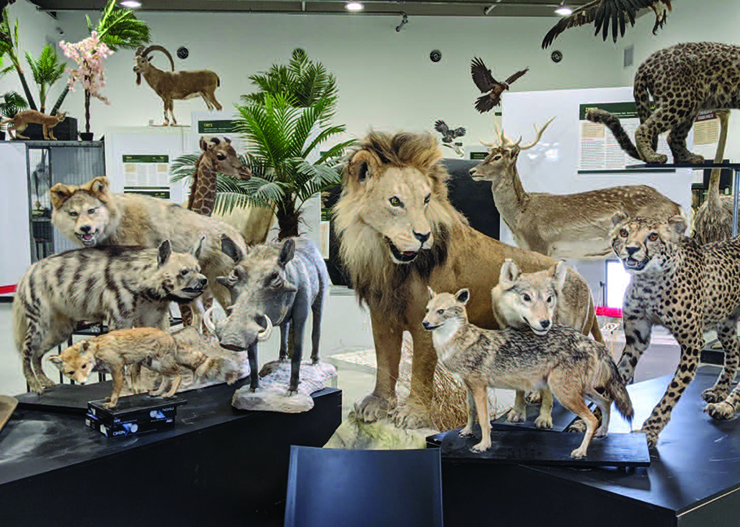
One of the ways in which we can acquire true Ahavas Hashem — love of G-d — is by appreciating the majesty of His creation. A combined museum, zoo, and Beis Midrash, the Biblical Museum of Natural History is the perfect place to appreciate the wonders of the animal world and to engage in serious Torah learning.
Rabbi Dr. Natan Slifkin jokes, “My parents dropped me off at the zoo when I was 5 and picked me up when I was 12. When people would ask what I wanted to do for a living, I’d tell them I wanted to run a zoo.” After learning in yeshivah, Rabbi Slifkin wanted to explore what the Torah has to say about animals. Since then, he has combined his two loves, culminating in the founding of the Biblical Museum of Natural History in 2014.
A highlight of the museum is the Hall of Biblical Wildlife, an incredible display of preserved, taxidermied specimens of actual animals. We can begin with the very first words of Shulchan Aruch, Orach Chaim: “One should strengthen himself like a lion to get up in the morning to serve his Creator.” The lion is often referred to as the king of beasts. In Jewish tradition, the lion is also a symbol of monarchy. When Yaakov blessed his son Yehudah, the ancestor of the Davidic dynasty, he referred to him as a lion three times.
The elephant is larger. The tiger is stronger. The cheetah is faster. Why, then, is the lion the king of the jungle and the symbol of strength? Other big cats like tigers, leopards, cougars, jaguars, and cheetahs live and hunt on their own. Their inclination is to fend for themselves and keep their prey for themselves. Lions are the only big cats that live in family groups called prides. They overcome their inclination and work together for the benefit of the entire pride.
Ben Zoma taught, “Who is strong? He who subdues his inclination.” The lion’s ability to subdue its inclination and live cooperatively for the benefit of all makes it the symbol of strength. When the Shulchan Aruch begins by telling us specifically to be strong like lions, it is teaching us to overcome our inclination and devote ourselves to the service of Hashem.
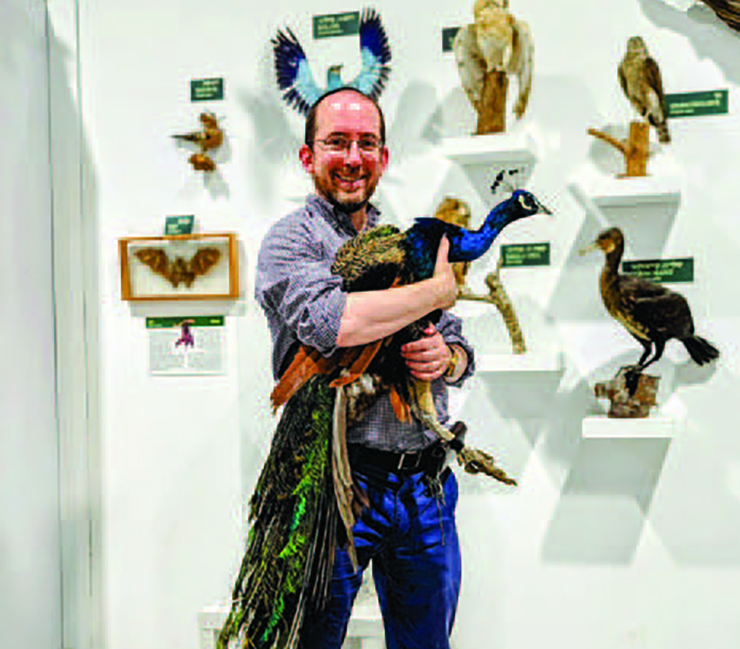
The lion also appears in the teaching of Yehudah ben Tema: “Be fierce like a leopard, swift as a nesher, fleet as a tzvi, and strong as a lion to do the will of your Father in Heaven.” Nesher is often translated as eagle, but there are no eagles native to Eretz Yisrael. Rashi explains that other birds carry their young in their claws to protect them from higher-flying birds. The nesher, as the highest-flying bird, carries its young on its wings. Thus, the more accurate identification of nesher is the griffon vulture, the world’s highest-flying bird, soaring at altitudes of up to 36,000 feet.
Tzvi is often translated as deer, but gazelles are abundant in Eretz Yisrael. It is an antelope known for its grace and speed.
The Hall of Shofars displays a wide variety of horns and explains why some can be used for the mitzvah of blowing the shofar on Rosh HaShanah, while others cannot.
The laws of kashrus come to life in the Hall of Kosher Classification. Visitors can see examples of split and cloven hooves and explanations of the process of chewing the cud. The birds that are forbidden to eat are on display, and some kosher species, such as quail and doves, can be seen live.
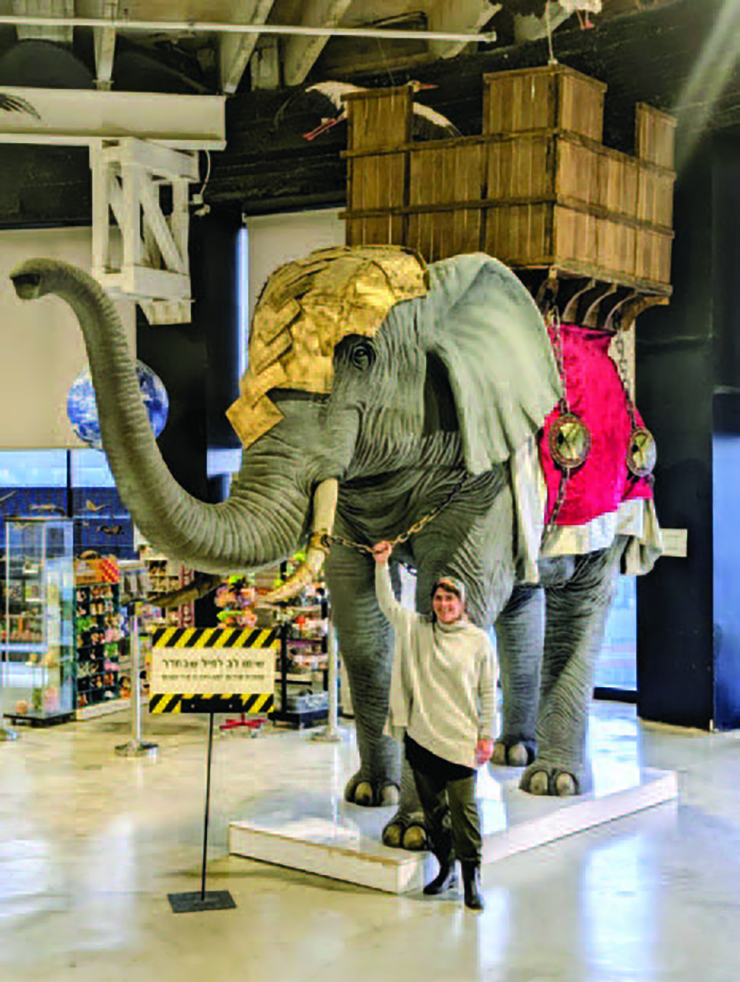
No visit to the museum on Chanukah would be complete without the elephant. Chanukah celebrates the rededication of the Beis HaMikdash by the Chashmona’im, but the war to drive out the Seleucid Greeks continued. Elephants are not native to Eretz Yisrael, but the Seleucid Greeks used elephants in the Battle of Beis Zechariah, fought in the area of today’s Gush Etzion. Elazar, the brother of Yehudah HaMaccabi, courageously went underneath the elephant of the commanding officer and stabbed it. Elazar was crushed to death by the fallen elephant, but his courage inspired his comrades, who would eventually prevail in the revolt.
If you are in Israel on December 24, don’t miss one of the museum’s signature events, the Feast of Exotic Kosher Curiosities. Past feasts have featured such exotic species as piranha, peacocks, goats, guinea fowl, lionfish, locusts, and sparrows. The cuisine, prepared by master chef Moshe Basson, and the masterful storytelling of Rabbi Slifkin combine for a truly memorable evening. For reservations, visit biblicalfeast.org. If you cannot make it to Israel, look out for future exotic kosher feasts in the United States.
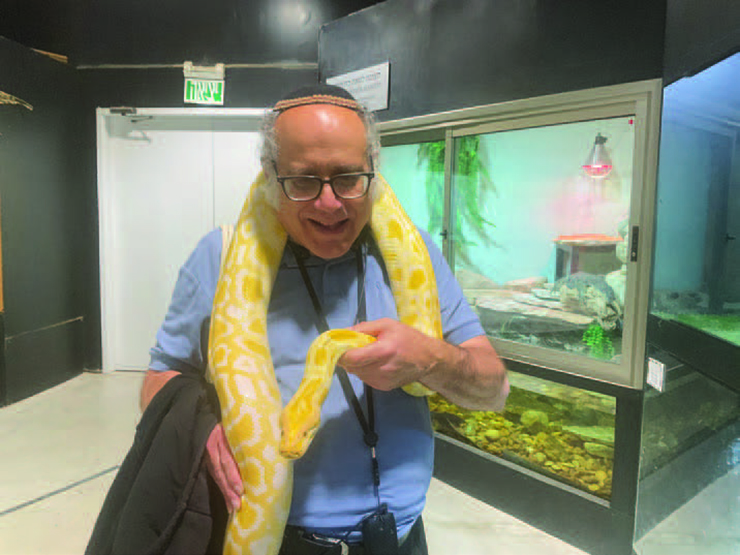
Children love the Wildlife Barn and the Hall of Small Animals, where guests can actually handle some of the friendlier creatures.
The snake was cursed to crawl on the ground, eat dust, and be a danger to humans. There are poisonous snakes, but the ancestors of the ones in the Serpentarium did have legs. The guide even showed me where they were. The boa constrictor and other snakes I handled, however, are perfectly harmless.
The Biblical Museum of Natural History is fun for the entire family while making Torah come to life. Don’t miss it.
The Biblical Museum of Natural History
Location: Corner of Choshen and Topaz Streets, Har Tuv B
How to get there: By car, search for the Biblical Museum of Natural History on Waze or Google Maps and be sure to select the Har Tuv address
Public transportation: Bus 615 from Jerusalem to the intersection of Road 38; turn left on Route 3885. At the roundabout, turn right to the museum
Parking: Available at the museum
Hours of operation: Sunday–Thursday, 10:00 a.m.–7:00 p.m.; Friday, 9:30 a.m.–12:30 p.m. Guided tours in Hebrew and English, self-guided tours, animal handling experiences, and family activities are available. Advanced reservations are recommended. Visit biblicalnaturalhistory.org/services
Admission: Adults 58 NIS; children ages 3–18, 45 NIS; senior citizens, soldiers, and students, 45 NIS; children with disabilities, 35 NIS; under age 3, free
Food: Kosher locusts are available for purchase in the museum gift shop. For more familiar fare, there are numerous kosher eateries in nearby Beis Shemesh
Restrooms: Clean restrooms are available on the premises
Website: www.biblicalnaturalhistory.org
By Manny Behar