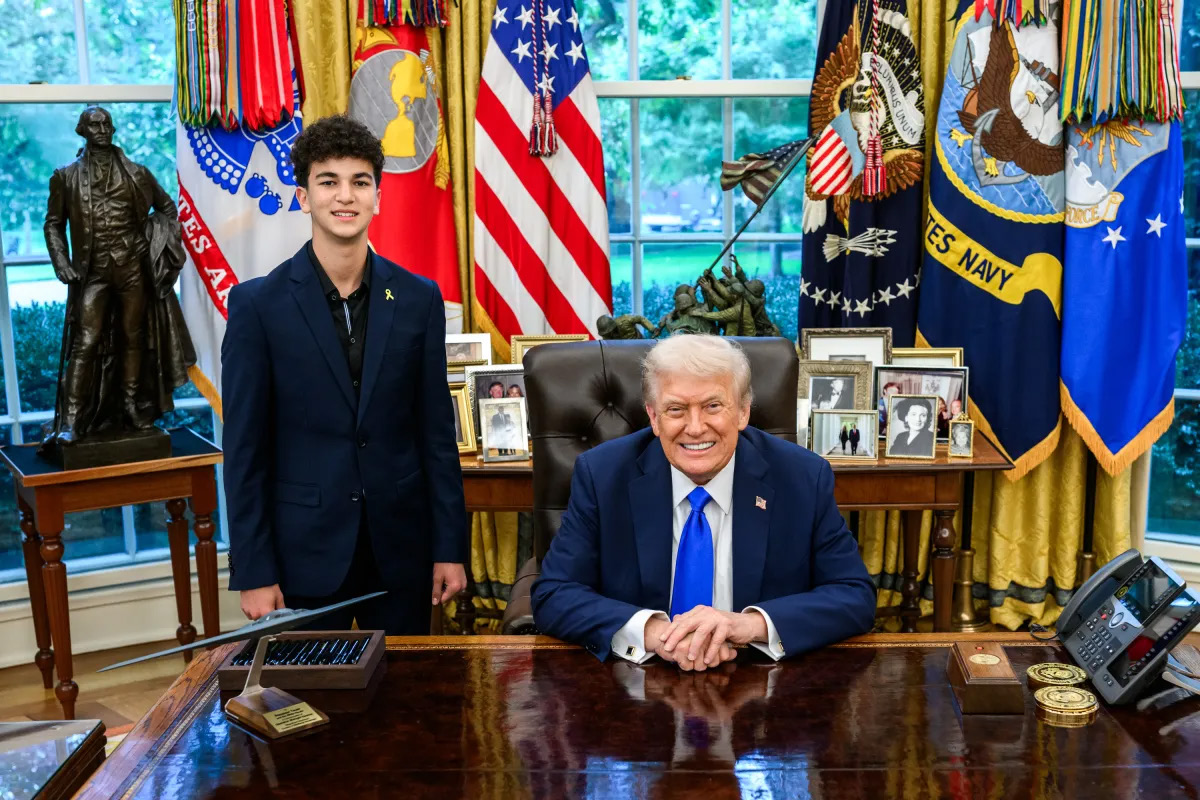
Inside the Oval Office last week, a small circle of rabbanim and communal leaders sat with President Donald Trump, marking a Pesach gathering that felt less like a formal reception and more like a significant pivot in Washington’s relationship with the frum community.
The afternoon began with a reception in the Eisenhower Executive Office Building, where approximately 70 staff members and senior officials joined Jewish communal leaders during Chol HaMoed. The event later transitioned into a more focused setting inside the West Wing, where a smaller delegation engaged directly with the President.
Senior administration officials in attendance included Commerce Secretary Howard Lutnick, EPA Administrator Lee Zeldin, White House Staff Secretary Will Scharf, Jewish Liaison Martin Marks, and Chief of Staff to the Vice President Jacob Reese. Also present was Rabbi Yehuda Kaploun, the Special Envoy to Combat Antisemitism.
The Jewish delegation represented a broad cross-section of Orthodox and chareidi leadership. Rabbi Levi Shemtov, executive vice president of American Friends of Lubavitch (Chabad), was joined by Rabbi Chaim Dovid Zwiebel of Agudath Israel of America. The mayors of Kiryas Yoel and New Square were also in attendance, alongside Rabbi David Niederman of the United Jewish Organizations of Williamsburg, Rabbi Moshe Margaretten of the Tzedek Association, and Rabbi Dr. Meir Soloveichik of Congregation Shearith Israel.
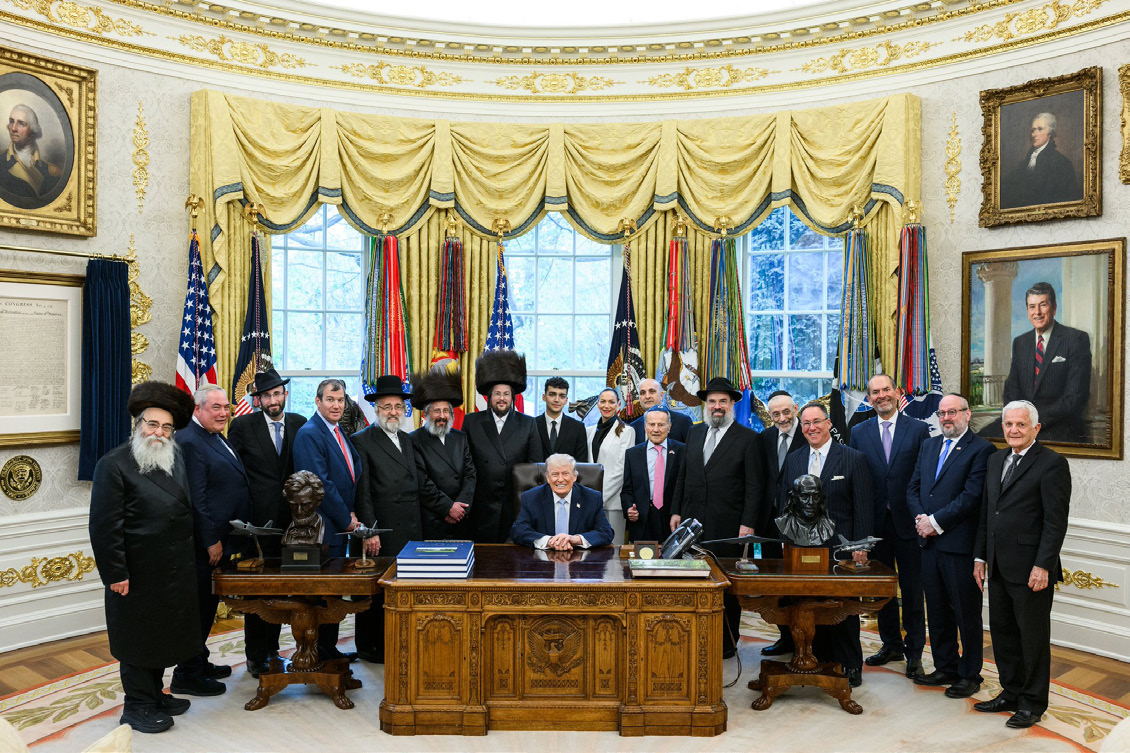
The gathering included personal stories of survival and resilience. Holocaust survivor Jerry Worski attended alongside Jonathan Burkan and Jeff Miller of the U.S. Holocaust Memorial Council. In a particularly moving moment, released hostage Edan Alexander attended the gathering with his parents.
The conversation inside the Oval Office focused on the most immediate pressures facing the community. The delegation and the President discussed the necessity of increased security funding for Jewish institutions, the global rise in antisemitism, and the strategic challenges posed by Iran. The President also specifically inquired about Sholom Mordechai Rubashkin, referring to his previous sentence as a “great injustice” and asking the group for an update on his well-being.
A.D. Motzen, National Director Of Government Affairs for Agudath Israel, noted that the meeting provided a vital platform to express appreciation for administration policies concerning religious liberty, education, and the physical security of the Jewish people.
The historical weight of the meeting was not lost on those in the room. In 1943, more than 400 Orthodox rabbanim—led by Harav Eliezer Silver, zt”l, the founder of Agudath Israel of America—marched on Washington to plead with President Franklin D. Roosevelt to rescue European Jewry. At the time, Roosevelt famously declined to meet them, reportedly exiting the White House through a side door to avoid the delegation.
Eighty years later, the contrast was stark. Representatives of the same movements were not just standing on the sidewalk; they were seated inside the Oval Office.
While Pesach gatherings in Washington have occurred in the past, the high level of direct engagement with chareidi and Orthodox leadership signaled a shift in which voices are being prioritized in the capital. As the holiday of Pesach serves as a perennial reminder of the transition from exile to freedom, last week’s reception served as a modern testament to the community’s standing in the halls of power.