Many new, innovative programs and courses are scheduled for the fall
In its latest college guide, for 2027, the respected Princeton Review has named Queens College a Best College—a national honor extended for the 35th year in a row. It also named Queens a Best Regional College–Northeast. The Princeton Review, which offers test preparation, tutoring, and other educational services, issues annual college rankings that students rely on in choosing the schools they wish to attend.
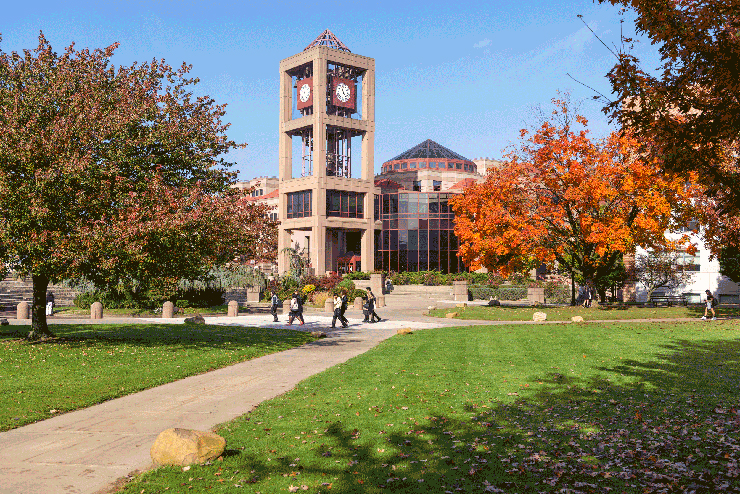
Located on a beautiful 80-acre campus in Flushing, New York, Queens College enjoys a national reputation for its liberal arts and sciences and pre-professional programs. With more than 60 undergraduate programs, more than 100 graduate degree and certificate and honors programs, and many research and internship opportunities, the college helps its students realize their potential in innumerable ways. Thanks to its outstanding academics, generous financial aid packages, and relatively low costs, the college is also ranked eighth as a Forbes College with the Highest Return on Investment for Graduates Nationwide, and sixth as a Wall Street Journal Best Value College Nationwide. In addition to the Princeton Review, Forbes Magazine, Money Magazine, and U.S. News and World Report all recognize Queens as a top northeastern college. Queens College has also been ranked in the top one percent of colleges nation-wide in helping disadvantaged students attain upward social and economic mobility.
“We are honored to be recognized by the Princeton Review,” says Interim President Elizabeth Hendrey. “It should come as no surprise to New Yorkers that we have been named again—as we have been every year since the inception of these rankings. We offer an excellent, always up-to-date education, competitive with the best schools but at a more affordable cost. Our faculty are standouts who win many awards and honors, our facilities are enviable, and our students are highly motivated. We are an indispensable gateway to professional careers and graduate school.”
Part of the college’s success lies in its forward-looking curriculum, which is continually updated to add fresh degree opportunities. The School of Education is introducing three degree programs for 2026–2027: MSEd in special education, all grades; BS in early childhood and childhood education; and BS in bilingual early childhood and childhood education. The Department of Computer Science and the Department of Linguistics, TESOL and Communication Science and Disorders are jointly offering a new bachelor of science degree in computational linguistics. Aimed at providing students with the skills needed for a career in computerized natural-language processing, it was developed in response to industry and student demand.
New courses are also on offer across the curriculum. The School of Business is launching three core courses designed to prepare students for a global, data-driven economy. These are BUS 101, Personal Finance; BUS 111, Introduction to Management; and BUS 140, Introduction to Business Analytics. A redesigned BUS 160W, Business Communication and Career Readiness, will help students build essential skills valued by employers.
The Department of Psychology is rolling out several courses. PSYCH 341, Introduction to Psychodynamic Psychotherapy, explores fundamental concepts. PSYCH 2813, Introduction to Clinical Behavior Analysis, will help students understand the roles and responsibilities of a registered behavior technician. PSYCH 3283, Fieldwork in Community Mental Health at the Queens College Psychological Center, places students in a training clinic where they learn about diagnostics and treatment.
Italian American Studies announced revival of a course that has not been taught for several years. ITAST 704, Italian American Cinema: Production and Representation, will be offered to graduate and advanced undergraduate students. The course offers a close look at the celluloid works of some of the more prominent names in twentieth- and twenty-first-century Italian American cinema as well as films, not made by Italian Americans, about Italian Americans, such as Spike Lee. In addition to the usual historical and thematic analyses of the works, it will examine the technique, intention, and narrative responsibility of the contemporary filmmaker.